Solar for Motorhomes and Campervans: A Beginner’s Guide
Solar power systems for motorhomes and campervans provide a renewable energy source to support off-grid living. These systems typically include solar panels, batteries, and an inverter to convert solar energy into usable electricity. This guide will explore the benefits of solar energy for mobile living, key components of a solar setup, installation considerations, and maintenance tips to ensure optimal performance.
Key takeaways
- Assess energy needs to determine the right solar panel size.
- Motorhomes typically require 200 to 400 watts for essential appliances.
- A solar setup includes panels, charge controller, batteries, and inverter.
- Ensure proper installation to avoid inefficiencies and potential damage.
- Regularly clean panels to maintain performance and longevity.
- Adhere to local regulations for safe and compliant installations.
- Optimise component selection for improved off-grid camping efficiency.
Understanding Solar Power Basics
Begin by assessing your energy needs to determine the appropriate solar panel system for your motorhome or campervan. Understanding your power consumption is crucial, as it directly influences the size and number of solar panels required. Most motorhomes typically need between 200 to 400 watts of solar power to run essential appliances like lights, refrigerators, and charging devices.
Solar panels convert sunlight into electricity through photovoltaic cells. These cells generate direct current (DC) electricity, which can be stored in batteries for later use or converted to alternating current (AC) for powering standard appliances. The efficiency of solar panels has improved significantly, with modern panels achieving efficiencies of around 20% or more, allowing for greater energy generation in limited space.
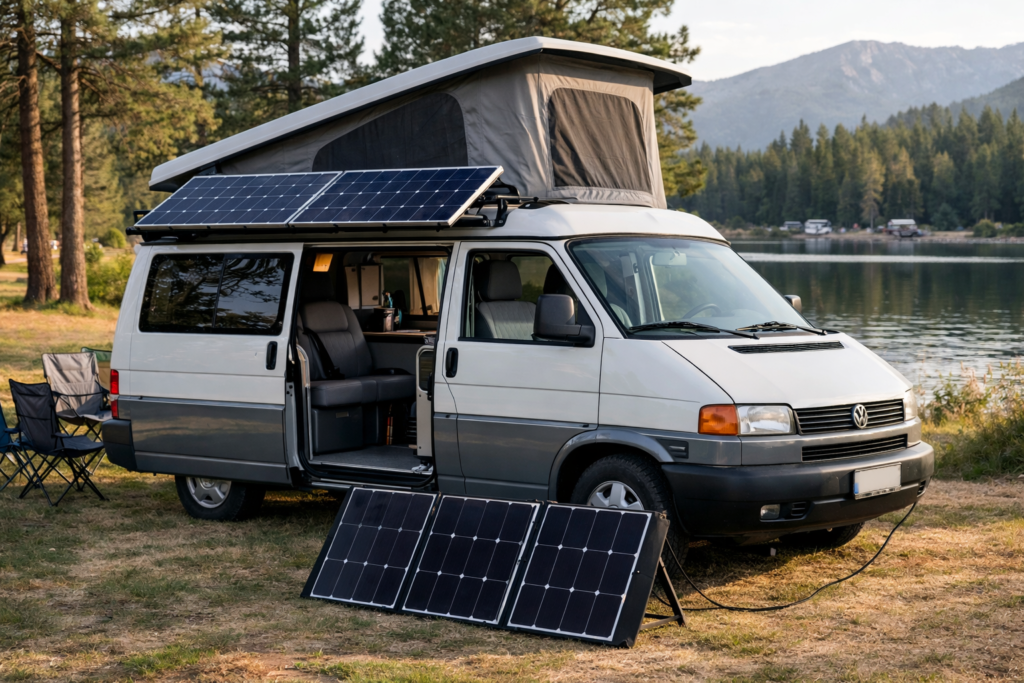
Installing a solar power system can reduce reliance on generator power and enhance your off-grid capabilities. This not only lowers fuel costs but also provides a quieter, more environmentally friendly energy source. For reliable installation, consider consulting professionals who specialise in Solar Panels for tailored solutions that meet your specific needs.
Choosing the Right Solar System for Your Vehicle
- Increases energy independence
- Reduces reliance on generator power
- Environmentally friendly energy source
- Initial installation costs can be high
- Requires regular maintenance
- Performance can be affected by weather conditions
Installing a solar power system can increase your energy independence, allowing you to camp off-grid for extended periods. A well-designed solar setup typically includes solar panels, a charge controller, batteries, and an inverter. This combination ensures you can harness and store energy effectively, providing power for essential appliances without relying on external sources.
Choosing a system with a capacity of 300 watts or more is often beneficial, as it meets the energy demands of most motorhomes and campervans. This capacity allows you to run multiple devices simultaneously, enhancing your camping experience. While alternatives like portable solar panels exist, they may not provide the same efficiency or convenience as a fixed installation.
For professional installation and advice tailored to your specific vehicle, consider reaching out to Knights Camper Conversion Company. Their expertise can help ensure your solar system is optimally configured for your needs.
Installation Considerations for Solar Panels
Many motorhome and campervan owners underestimate the importance of proper installation when adding solar panels. A poorly installed system can lead to inefficiencies and potential damage. Begin by ensuring that the mounting surface is clean and structurally sound to support the weight of the panels. Use high-quality brackets and sealants to prevent leaks and secure the panels firmly in place.
Next, connect the solar panels to a charge controller, which regulates the voltage and current flowing into the batteries. This step is crucial for preventing overcharging, which can shorten battery life. Choose a charge controller that matches the total wattage of your solar panels and the type of batteries used. For optimal performance, install the charge controller in a cool, dry location within the vehicle.
Ensure that all wiring is appropriately rated for the system’s voltage and current. Use weather-resistant connectors and protective conduits to safeguard against environmental factors. When installed correctly, a solar system can provide reliable power, enhancing your camping experience and allowing for greater energy independence.
Maintaining Your Solar Setup
Regular maintenance of your solar setup ensures optimal performance and longevity. Begin by cleaning the solar panels every few months to remove dust, debris, and bird droppings that can block sunlight. Use a soft cloth or sponge with mild soapy water to avoid scratching the surface. Next, inspect the wiring and connections for any signs of wear or corrosion, as these can lead to inefficiencies or system failures. Ensure that the charge controller is functioning correctly and monitor battery levels regularly to prevent overcharging or deep discharging, which can damage the batteries.
A common mistake is neglecting to check the inverter, which converts the stored DC power into usable AC power. If you notice any unusual noises or error messages, consult the manufacturer’s manual for troubleshooting steps. Ensure that the system is properly grounded to prevent electrical hazards. By following these steps and regularly reviewing your solar setup, you can maximise energy efficiency and extend the lifespan of your solar power system.
Optimising Solar Energy Use in Motorhomes
Effective solar energy use in motorhomes enhances energy efficiency and reduces reliance on traditional power sources. By optimising the solar setup, users can significantly improve their off-grid camping experience. The key lies in selecting the right components and ensuring proper integration. Solar panels convert sunlight into electricity, which is stored in batteries for later use. A well-matched charge controller regulates the flow of energy, preventing overcharging and prolonging battery life.
Implementing a battery monitoring system allows users to track energy consumption and solar production in real-time, ensuring they do not exceed their available power. Integrating energy-efficient appliances can further reduce consumption, making the most of the solar setup. For instance, LED lighting and energy-efficient refrigerators consume less power, allowing for longer off-grid periods.
When comparing solar energy vs traditional energy sources, solar power proves to be a sustainable and cost-effective choice for motorhome owners. By harnessing the sun’s energy, users can enjoy extended adventures without the need for constant recharging from external sources.
Legal and Safety Regulations for Solar Installations
For motorhome and campervan owners, adhering to legal and safety regulations is crucial when installing solar systems. Ensure compliance with local laws, which may dictate specific installation practices and equipment standards. This approach not only guarantees safety but also maximises the efficiency of your solar setup.
Understanding these regulations helps prevent potential fines and ensures that your system operates safely. Many regions require certified components, such as solar panels and inverters, to meet safety standards. Proper installation techniques are often mandated to protect against hazards like electrical fires or structural damage to your vehicle.
While DIY installations may seem cost-effective, hiring a certified professional can ensure compliance with regulations and enhance safety. This investment may save you from costly repairs or modifications in the future. For more information on common misconceptions about solar energy, visit Solar Energy Myths.
Frequently Asked Questions
What are the benefits of installing solar panels on a motorhome or campervan?
Installing solar panels on a motorhome or campervan offers energy independence and reduced reliance on traditional power sources. This setup allows for off-grid camping, enabling longer trips without the need for electrical hookups. Solar panels can lower fuel costs and enhance the sustainability of your travel experience.
How do I determine the right size solar system for my motorhome?
Understanding your energy needs is crucial for sizing a solar system. Calculate your daily power consumption by adding up the wattage of all devices you plan to use. Then, choose a solar panel capacity that exceeds this total, typically aiming for 20-30% more to account for inefficiencies and weather variations.
What components are needed for a complete solar setup in a campervan?
To set up a complete solar system in a campervan, start with solar panels, a charge controller, and a battery bank. These components work together to harness solar energy, regulate charging, and store power for use. Consider an inverter to convert DC power to AC for appliances.
How much does it typically cost to install solar panels on a motorhome?
The cost to install solar panels on a motorhome typically depends on the system size and components. A basic setup can range from £1,500 to £3,000. For larger systems with additional features, costs may exceed £4,000. Installation complexity and professional assistance can also influence the final price.
What maintenance is required for solar panels on a campervan?
Solar panels require minimal maintenance, typically needing a clean every 6 to 12 months. This ensures optimal performance by removing dirt and debris that can block sunlight. Check connections and wiring for wear or corrosion to maintain efficiency and safety.